Justice Vs Expediency
Justice is the unshakable foundation of true leadership. From the perspective of Imam Ali, justice must never be sacrificed for political expediency. While expediency seeks short-term stability, justice preserves the moral balance of society. Through unwavering commitment to equality and principle; even at personal and political cost. Imam Ali demonstrated that lasting peace and legitimacy can only stand upon justice, not compromise with oppression.
The Value of Justice and Its Relationship to Expediency (مصلحت) from the Perspective of Imam Ali
From the viewpoint of Imam Ali (a), the principle that can preserve social balance, keep everyone satisfied, grant health to the body of society, and bestow tranquility upon its soul is justice. Oppression, tyranny, and discrimination are incapable of bringing satisfaction or peace even to the soul of the oppressor or to the soul of the one who benefits from oppression let alone to the oppressed and the trampled. Justice is a broad public highway that can accommodate everyone and allow all to pass without difficulty, whereas oppression and tyranny are narrow byways that do not even lead the oppressor himself to the destination.
We know that during his caliphate, Uthman ibn Affan assigned a portion of the public wealth of the Muslims as fiefs to his relatives and close associates. After Uthman, Ali (a) assumed the reins of government. Some asked him not to apply matters retroactively and not to concern himself with the past, but rather to limit his efforts to events that would occur from that point onward during his own caliphate. However, he replied: “Ancient right is not nullified by anything.”
He further declared:
“By God, if I were to find that property with which women had been married or slave women purchased, I would restore it, for in justice there is expansiveness, and whoever finds justice despite its vastness, oppression will be even more constricting for him.”
(Nahj al-Balaghah, Sermon 15)
This means that justice is something in which one can believe as a boundary, and within whose limits one can be satisfied and content. But once this boundary is broken and this belief removed, and once the human foot crosses beyond it, one no longer recognizes any limit for oneself. Whatever boundary one reaches, by the nature of one’s insatiable instincts and desires, one becomes thirsty for another boundary and feels even greater dissatisfaction.
Imam Ali (a) believed that justice should not be sacrificed for expediency. Discrimination, favoritism, factionalism, and silencing mouths by stuffing them with large morsels have always been regarded as necessary tools of politics. Now, however, a man has assumed leadership and taken the helm of the ship of politics who is an enemy of these tools; his aim and ideal is to combat this kind of political maneuvering. Naturally, from the very first day, those who live by expectations the very political figures themselves become resentful. This resentment leads to sabotage and creates various troubles. Well-meaning and sincere friends came to Imam Ali (a) and, with utmost goodwill, requested that for the sake of a more important expediency he introduced some flexibility into his policies. They suggested that he spare himself the trouble caused by these agitators. These are influential individuals, some of them prominent figures from the earliest days of Islam. Moreover, you are presently facing an enemy like Mu‘awiyah, who controls a fertile province such as Syria. What harm would it do, they asked, to temporarily set aside the issue of equality and parity for the sake of expediency?
Ali (a) replied:
“Do you command me to seek victory through injustice toward those over whom I rule? By God, I will not do so as long as night follows day and stars rise one after another in the sky. If the wealth were my own, I would still distribute it equally among them how much more so when the wealth is the wealth of God.”
(Nahj al-Balaghah, Sermon 126)
Sources
Morteza Motahhari, A Journey through Nahj al-Balaghah, pp. 113–115
My other Speeches
View All Speeches
Related Posts

A Nasbi Who Had a Right Over Ali (a)
A story of Shia a who visited a village that belonged to the enemies of AhulBayt (a)
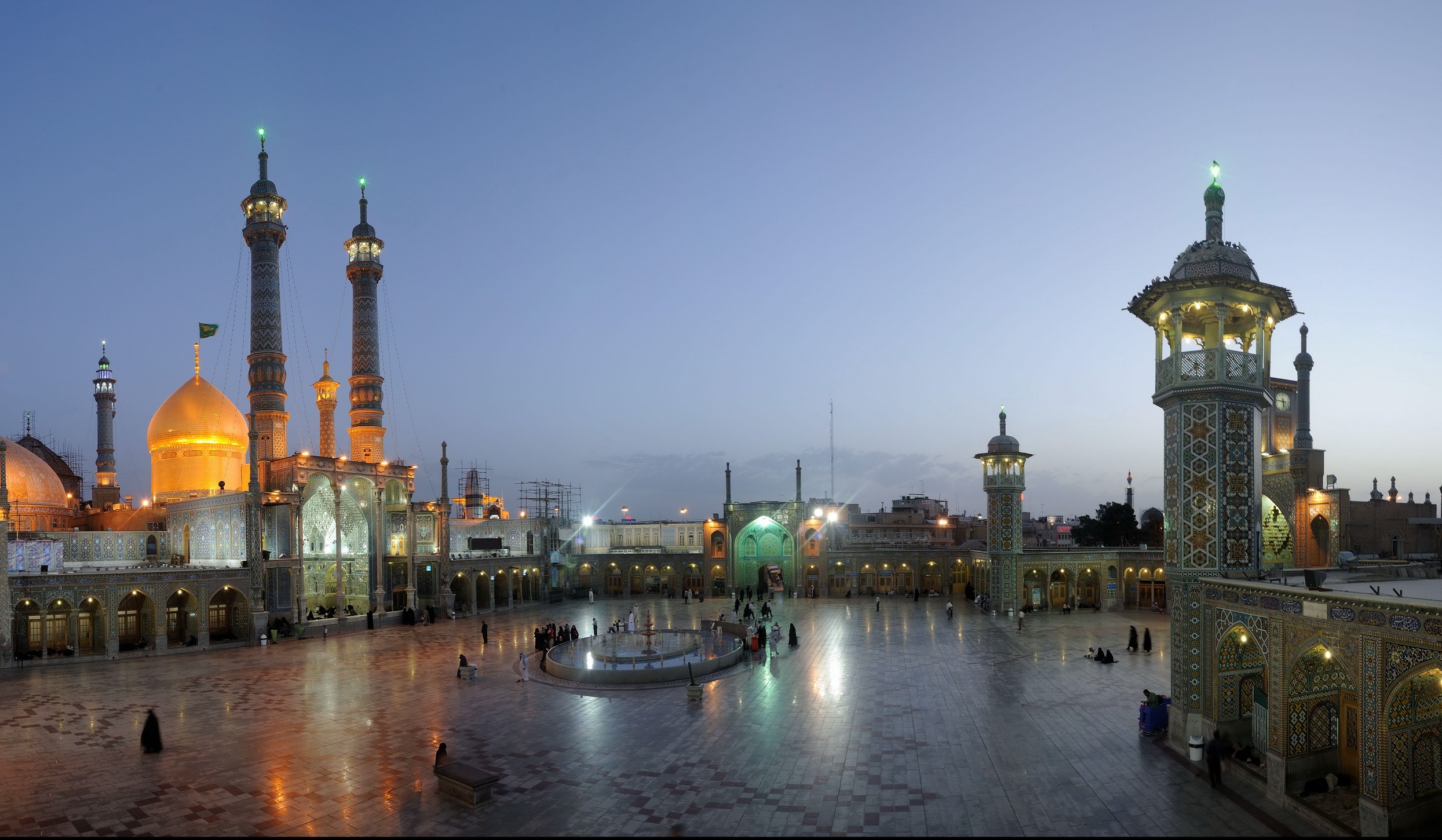
Where is the Haram of AhlulBayt (a)?
Narration of Imam Ja'far al-Sadiq (a) and a Dream of Ayatullah Mehmood Najafi

Whoever Is Granted Four Things Will Not Be Denied Four Others
This hadith teaches that whoever is granted repentance, gratitude, supplication, and seeking forgiveness will surely receive their divine outcomes. It reassures believers that sincere devotion always brings acceptance, increase in blessings, answered prayers, and forgiveness.

Social Pressures and Islamic Principles
“Strong families, like strong faith, are built step by step on discipline, support, and remembrance of Allah.”
